A wild slim alien


4 Comments

From your favourite sky

IMG_1223s

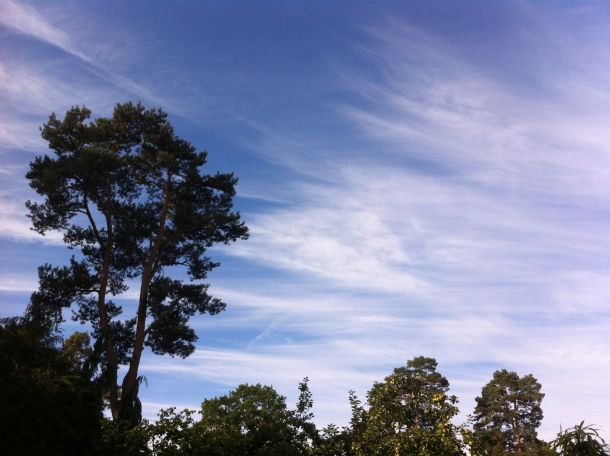
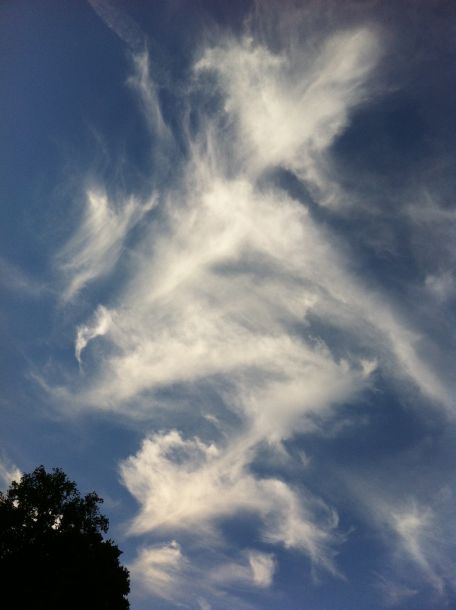
I can pinpoint the moment.  It was standing in the park by the cricket ground while my daughter played on the new zip wire.  I looked up from my phone and out across the field and the vast sky full of huge summertime clouds seemed to beg for my attention. I shot the sky where I stood. The next day, strolling through the centre of the city, I did it again.  And then I thought about posting the results.  So that’s what I’ve been doing ever since, at From your favourite sky.

Of course I’m far from the first to point my camera predominantly at the sky on a daily basis – Alistair shoots summer skies every year – but we all see the world differently; one person will completely miss what another sees, and vice versa. No two sets of daily photos would be the same.

The iPhone is not equipped with the greatest camera in the world but taking a photo to post each day is teaching me how to get the best out of it.  My framing gets better all the time, but in a sense that’s not the point; it’s more to make a record, of the days, of the skies, of the transient majesty of clouds.  In this country, in the space of a day, you can see so many different kinds of sky, though I confess I probably have already developed a tendency to discard overcast in favour of moments when the sky turns more interesting shades or colours.  Enough blue to stitch a sailor’s suit is often sufficient for me.  Nevertheless, photos on certain days seem distinctly ordinary, or even dreary; others come alive with structural detail from trees and telephone wires and buildings.  Trees in particular provide a land and sea-style contrast with the sky.  Inevitably there is an element of repetition, because generally I am in the same two places during the week; but there is variety in the repetition, an endless fugue.  Fundamentally it’s another way of saying, here I am, this is me, this is what I will see today, this is what I am seeing right now.  A daily postcard; a declaration of the everyday, each and every day.

Some days I take just a couple of photos, one to fulfil the requirement I’ve placed upon myself, another as insurance.  Others I will see wonders above me everywhere I look, and will take dozens, choosing the best later, and finding that I have to drop photos which are far better than the days preceding or following.  So far, I’ve only once been called a freak for pointing my phone at something it appears that only I can see.

At the beginning my intention was to do this for a year.  Now I think it will have to be a little longer, because one day, so absorbed was I in writing words, I forgot to take a picture, much to my annoyance when I realised too late the next morning.  (I wrote about that day instead, in far fewer than a thousand words.)  So to achieve 365 days in succession, completion date will be 3rd October 2014.  As long as I don’t forget another day along the way.

Here is the first of two selections of my favourite favourite skies so far:

IMG_1134s

IMG_1514s

IMG_1528s

IMG_1723s

IMG_1977s

IMG_2200s

IMG_2234s


Leave a comment

Water and ground in their extremity

awildslimalien's avatarA wild slim alien

water_ground

Sheep’s Head peninsula, Ireland, date unknown.

When you have nothing more to say, just drive
For a day all round the peninsula.
The sky is tall as over a runway,
The land without marks, so you will not arrive

But pass through, though always skirting landfall.
At dusk, horizons drink down sea and hill,
The ploughed field swallows the whitewashed gable
And you’re in the dark again. Now recall

The glazed foreshore and silhouetted log,
That rock where breakers shredded into rags,
The leggy birds stilted on their own legs,
Islands riding themselves out into the fog,

And drive back home, still with nothing to say
Except that now you will uncode all landscapes
By this: things founded clean on their own shapes,
Water and ground in their extremity.

– The peninsula by Seamus Heaney

View original post


Leave a comment

Garçon

If he knew the word, its connotations, this Englishman abroad would surely use it. Agitated from the moment they enter, he wears a crew-neck jumper over his shirt despite the heat and gives off the distinct impression that he never relaxes. His family are on guard. At a distance, so are we. The waiter takes his brusqueness, his expectancy that all will talk his language, in his stride. The whippet-thin bulldog is sure the food will be crap. His wife explains patiently to the middle child about reviews and reputation.

Halfway through the meal, the youngest gets a fit of the giggles. Stop laughing, says his father. But the boy’s too far gone. Tell him not to laugh. His wife refuses to scold her son for laughing. There’s hope for him yet. I imagine him one day laughing hard and uproariously at his father. Who may land one on him, but that would only be proving the boy’s point. And by then the boy will be big enough to lamp him back.

The eldest says little, preferring to observe. We are part of her observation, a comparatively quiet family. At one point our eyes meet. Perhaps she’s wondering about a father like me, while I consider hers. When she does speak, it’s with the voice of a different class. She’s a private school girl. There she has learnt tact. She won’t laugh at her father, at least not to his face, but she will frequently be embarrassed by him before she makes good her escape. Already she’s embarrassed. She knows he’s what she might learn to call uncouth. Or – an arsehole.

Can we get a taxi? The waiter won’t condescend to check. He says, At this time? and shrugs. Bulldog huffs off, his family snaking behind. I wish them luck.


Leave a comment

Mindball

This is how you play. You strap on a headband with three electrical sensors which measure your alpha and theta brain waves. Alpha waves are detected when you are that tricky mix of wakeful, relaxed and alert, while theta waves register when you are drowsy – too relaxed. Fixed to a table is a long thin plastic tube in which there is a little ball. A player sits at each end of the tube and the ball is controlled by your brain waves. Then it’s like blow football, only using your mind instead of your lungs and a straw. You try and push the ball to your opponent’s end by emptying your mind of all distractions but remaining alert. I started off well, focussing on the ball alone; but better able to become absorbed than I was, and for longer, my daughter grew into the contest and began to force it back. That, and the fact that two teenage boys came along and started a conversation right by my ear, which I couldn’t block out (tellingly my daughter could). Well, I wanted to know what they were saying. It was a nothingy conversation, the one explaining to the other the way the game worked, then suggesting they move on to a less busy exhibit, but my focus was shot. My daughter pushed the ball all the way to my end of the tube. I didn’t let her win; she beat me fair and square. I said, you must have an emptier brain than me. – It’s easy, she said, it’s like being on the sofa at home watching telly. So there may be some truth in what I suggested. Of course there is, she’s just a girl, and her mind is clear and brilliant. Overfull, mine is foggy and dull in comparison.


6 Comments

Strawberry cream cake

Cake

I’m partial to the richness of Terran cuisine. My daughter likes to bake. She no longer bothers to weigh the ingredients when mixing them; cakes come out of the oven just so. I eat a lot of cake. It’s a wonder I’m still a slim wild alien.

She makes one for her mother to take into work. Only the following day it’s forgotten; an emergency cake run is required. Mounted on a circular baking sheet, the strawberry-topped cream cake slides about on its plate like a curling stone on ice. I attempt to wedge the plate in the passenger seat footwell using map books, but despite driving carefully, it still flies off the plate at the first bend.

My driving is a standing family joke. But theirs is an outmoded notion, based on my formative years as a driver. Alright, I still have a tendency to think of a car as a mobile hi-fi, but it’s only in the last six years that I’ve driven regularly. I’m so much closer to 10,000 hours than I was.

Outside a school, mothers look on aghast as a lollipop man steps into my path – I have to brake suddenly. He’s ancient, and when he scowls at me, it’s like an imp from the buttress of a gothic cathedral come to life; centuries of locked-in scorn is unleashed in my direction. Forgive me, I had eyes only for the cake. Fortunately the damage is limited to one toppled strawberry. The rest of the journey unfolds without incident. The cake is safely delivered, swiftly demolished, and greatly admired.

The moral? When driving, pay no heed to the easily ruined cake in the footwell of the passenger seat. Or, should you have a prolific apprentice baker in the house, buy in a stock of cake boxes.


2 Comments

Tomorrow’s harvest – synopsis of a film

Gemini
It begins in June. A week after his birthday, in fact. A sickness falls upon the people of the earth. First accusations fly, then counter-accusations, then finally bombs. The apocalypse doubled. Wires fall silent as residual power fades. Only the odd transmission now, from who knows where and whom.

Reach for the dead
A couple are parted at the time of the apocalypse. In a week its work is complete and life as we know it is beyond hope of rescue. Everyone he knows and loves is dead, but for inexplicable reasons, some have survived, he among them, and he can’t help daring to hope that she may have been immune too. Away visiting in the hills of the north, perhaps she has been protected from the worst of the dual catastrophe.

White cyclosa
For a few days, he remains at the far extent of the suburban fringes of his provincial city, keeping a low profile, sniffing out a sense of the scale of the disaster, and how he might navigate his way to her, for it doesn’t take him long to realise that survival depends on leaving for the rural isolation of the north. Enlarged, irradiated spiders climb the walls and drop into his hair, freaking him out almost more than the gruesome sights he encounters on the streets.

Jacquard causeway
In a Jeep, and then on foot, he journeys to her. Dodges wrecks and barricades and attempted car-jackings. Goes off road when the main routes become impassable. Switches to walking when the petrol runs out. Sticks to the back ways, the lanes, a compass hanging around his neck, always aligned to the north. On the way he faces many dangers. Brigands wait at one end of a causeway across a marsh; with the press-gangers who have dogged his every step behind him, he cannot go back the way he came. He has no choice but to brave the cold, swampy soup of the marsh. On the far side, he comes across an orphaned child who has escaped from the brigands. He accepts his obvious duty to look after her. She has with her a dog, who will the very next day save them from a murderous psychopath, with a warning bark and then a savage attack.

Telepath
He knows that his love will have remained where she was, looking after any of the frail about her to have survived and fearing the worst about him because of his proximity to one of the apocalypse’s many likely epicentres. But the mind is a powerful thing and half-wishing, half-deliberately she transmits to him that she is still alive, that she loves him, that she knows he is coming for her, and that just as she won’t give up on him, she knows he won’t on her, no matter what. He receives the messages in a feverish waking dream, the girl leading him by the hand. He burns hotter with the exultation of knowing that his love is still alive, that she waits for him. Neither knows how long it will take but both believe that one day, maybe sooner, maybe later, they will be reunited. He counts the days.

Cold earth
At one point he and the young girl are travelling down a long holloway during a violent storm. It ceases as suddenly as it started, and at that moment the ash clouds are parted and sun breaks through for the first time since the week of the apocalypse. The canopies of the holloway shield the sunlight except for slivers and chinks. Distraught with wonder, he thinks: how could we have let such beauty go to waste? And yet somehow there are still birds to sing at the sight of the sun, offering the travelling pair hope.

Transmisiones ferox
With fierce determination, man and girl learn together the arts of hiding, foraging, and hunting, in that order of necessity. The girl has a better grasp of the fruits of the forest than he, while – having previously been a vegetarian – he learns to skin an animal through trial, error, and a book borrowed on permanent loan from an abandoned library. At night they search the airwaves on a battery-powered radio, but the only patterns in the static are the ones they imagine themselves.

Sick times
When sickness gets the better of him, it is the girl who finds them an isolated house in which he can recover. The cellar has two exits. There they lie low. She makes him nettle tea and salves his sores with a paste made from the same leaves. With the plasticity of youth, she is adapting to the new state of things, this post-apocalyptic landscape, far better than he.

Collapse
They resume their journey, but this time it is the girl who gives way, falling prey to radiation sickness. And now in another hideout, he nurses her back to health, using a pharmacy’s formulary and drugs, all the while wondering whether or not human evolution will be able to outpace the anatomical effects of nuclear fall-out. This girl is a survivor, though, and soon they are able to press on, close now to their destination.

Palace posy
Meanwhile, racketeers are keeping his love against her will, but because this is a story, an artifice, somehow her dignity will have been spared her; or, at least, she will not speak of it to him once she has been rescued. Though perhaps it might be that the brigand’s leader genuinely has fallen for her, and has shown himself to be a patient if dangerous man.

Split your infinities
Through binoculars he studies their encampment, an old farmhouse whose dry stone walls have been topped with barbed wire. He stakes it out and watches the comings and goings, the girl waiting patiently at his side, and the faithful hound at hers. When his eyes tire, she takes her turn to watch and note. On the third day he catches sight of his love at the back door, pausing for air with what looks like a kitchen implement in hand. He risks standing, so that she can see him, and anyone else might – a chance he feels he has to take. After a time she turns in his direction, and visibly starts. With his arms crossed in front of his chest, he signals a kiss. But she is called back inside, and needs must go, not daring to look round.

Uritual
With the girl bedded down in a house as safe as any in these times, he keeps vigil into the depth of that night, awaiting the moment when he will attempt the rescue. Through binoculars, in the fading light of the evening, his heart has jumped to see a window marked with an X in parcel tape. Now he knows where to go, and what he has to do.

Nothing is real
His heart pounding, armed with wire-cutters, rope, a gun, and climbing gloves, he runs across the open fields to the stone wall perimeter. He cuts through the barbed wire, and follows the shadows cast by the outbuildings until he comes to the drainpipe he hopes will bear his weight. Even with the gloves, it’s a struggle to climb, but somehow he manages to make it to the roof that will allow him to access her window, if he can keep his balance across its apex. After a pause to steady his nerves, he runs it, and makes the safety of the wall. Then she is there at the open window and with his mind outside of his body he tells her to secure the rope to one of the feet of her bed. She has a rucksack of things ready on her back. She knew he was coming for her. They only dare to embrace once safely beyond the barbed wire perimeter, and that’s when his mind and reality both come crashing back into him.

Sundown
It is their first day together as a family of three. The woman and the girl are shy of each other, but he can see the first signs of friendship and what will become love. He is mortally tired after the night and the days spent watching and one in which they tried to put as much distance between themselves and the farmhouse as they could.

New seeds
They find the perfect house, one built into the side of a hill, all but invisible from the passing road. A nearby clearing in a wood becomes their allotment. Whenever they venture out, danger and distrust go hand in hand, but gradually, through chance encounters, a network is built of people intent on surviving whatever the poisoned world throws at them. All for one, and one for all, they stockpile food, fight off threats to their security and raise their children.

Come to dust
Dust storms are a condition of the new life, but safe in their hillside home, the growing family – now supplemented by twin boys whose survival instinct is as strong as that of their parents – rides them out, and afterwards, sweeps up everything back to a state that they are beginning to dare to think of as normal.

Semena mertvykh
In many ways the new life is an idyll that surpasses the old. But it’s impossible not to look back, and mourn what has gone, what has been lost from the world. Mourn the individuals, the millions, the billions who died. In any individual who survived the end of the world, the will to do so must have been strong, but both the man and the woman have a sense that this is fed by the determination of the species as a whole not only to endure, but to live free. The fate of the dead informs all of the living yet to be done.


Leave a comment

Stairways and singers of tales

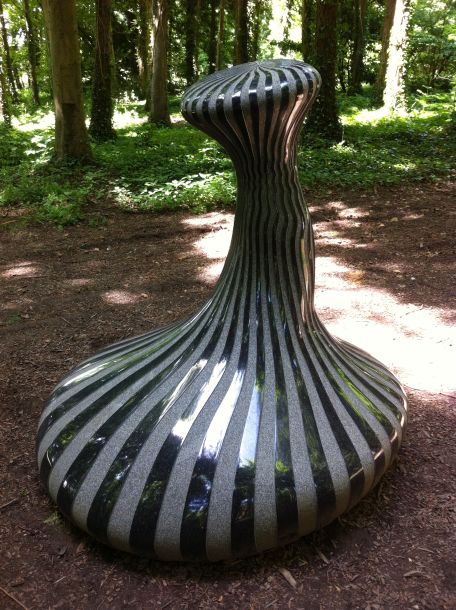
Host
Peter Burke Host 1996

System no. 19
Julian Wild System no. 19 2007

Stairway
Danny Lane Stairway 2005

Singer of tales
Jon Isherwood Singer of tales 2010

Ace of diamonds III
Lynn Chadwick Ace of diamonds III 2004.  Both the larger and the smaller pieces of steel swing on pivots in the wind.

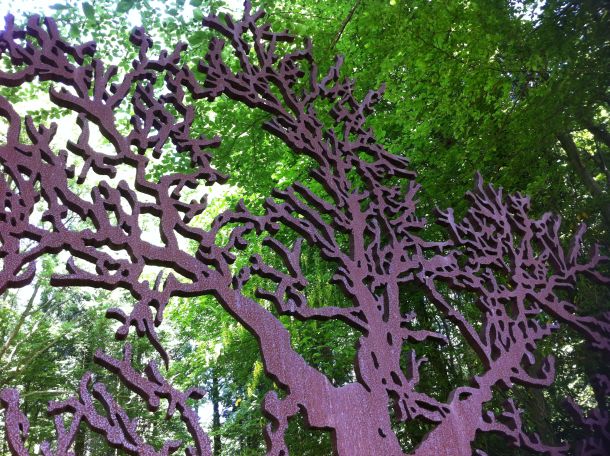
Exotic tree
Zadok Ben-David Exotic tree 2010

Picnic grove
David Brooks Picnic grove 2012

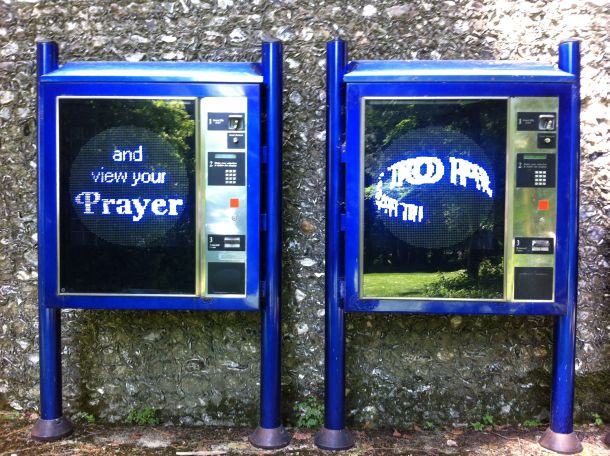
It pays to pray
Rose Finn-Kelsey It pays to pray 2001

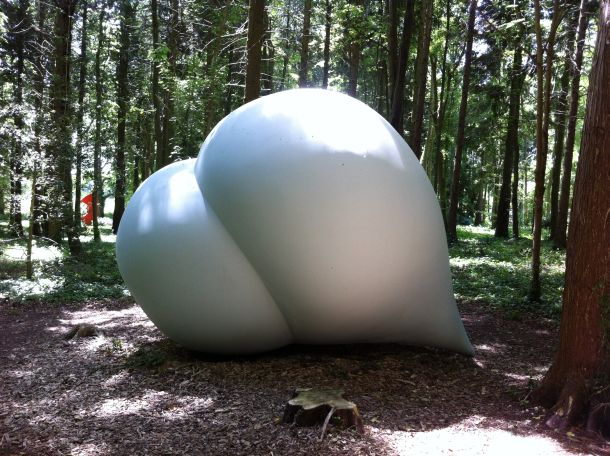
Polar bear
Ellis O’Connell Polar bear 2008

Janus head
Peter Burke Janus head 1999

London-Paris
Eduardo Paolozzi London-Paris 2000

Pavillion
Alex Hartley Pavillion 2000.

All photographs taken at the Cass Sculpture Foundation, Goodwood, West Sussex, June 2013.


2 Comments

Grass is greener

A believer secretly doubts God and does devilish things when she thinks He’s not looking. An atheist is desperate to have God hold him in His heart so that he is no longer obliged to hold himself.

A teenage boy wishes he could dress like a girl, while a teenage girl, already dressing like a boy, doesn’t know what the fuck she wants, but it sure as hell isn’t this.

A professional footballer wants to be a child again, for the game to be like it was when he was a kid kicking about the parks – endlessly enjoyable. A boy wants to be a professional footballer, at the centre of the action, of the world, blissfully unaware of how such a life may limit and challenge him.

A public sector employee wants the risk and the possibilities of the private. A private sector worker wants the absence of risk and the security of the public.

A married man yearns to be unmarried and free; a lonely single one dreams the full dream of love and the ideal of 2.4 children, or whatever the average is now in the postindustrial Western world.

Another unmarried man wants to be his idea of a woman – soft and cosseted and owned – while a married woman wants to be her idea of a man – free and reckless and amoral.

An old woman wants to be young again and noticed. A young woman wishes she was old, so she could escape the eyes which follow her everywhere she goes.

A dog wants to be a cat, so he can exit via the flap, while the cat wants to be a dog, because frankly she’s bored of the immediate locale, and that fucking dog gets to go on family trips and pee on lampposts all over town.


5 Comments

Wild blubbery aliens

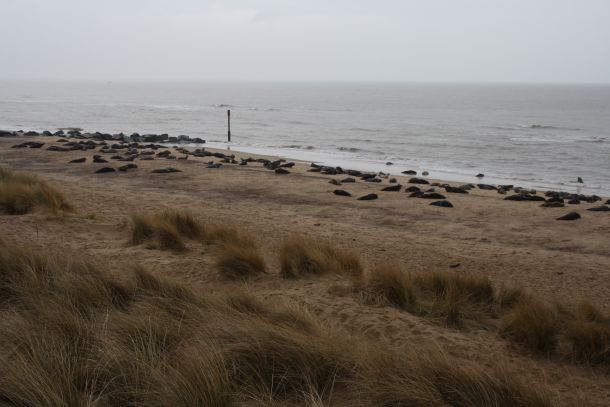
We heard about them from the man in the hut serving a huge old wind pump once used to drain the Broads; one of those people who vocalises everything they think. On the last day of the holiday we parked up again by the pump and walked in rain for nearly an hour to reach the spot on the coast he’d described. I don’t think my daughter really believed there would be that many. But then neither did I.

Grey seals

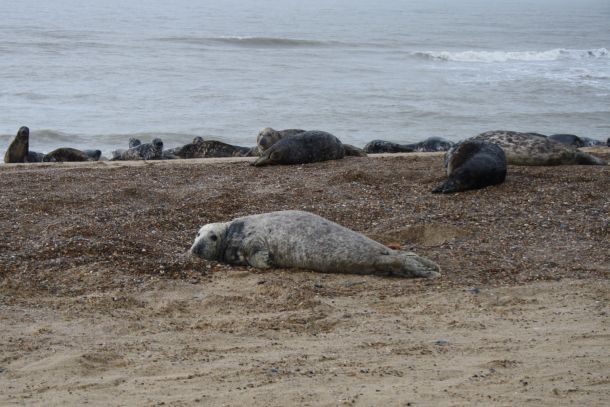
We breasted the dunes and looked down. From that distance, if you stumbled upon them without knowing they were there, you might think that they were rocks, because they blended in with those which form the groynes on this quickly eroding coast; and perhaps because they were lounging post-prandially, there wasn’t a lot of movement. 300 grey seals, actually a variety of colours, spread across four sections of beach. An amazing sight. Carefully we edged to within about ten metres. Any closer and they lumbered nearer to the swash.

Grey seals

Seals are strange creatures; fatty blobs on land, swift and true in water. Though the grey’s scientific name Halichoerus grypus translates as ‘Hooked-nosed sea pig’, there was something canine about them; they seemed both alert and inert at the same time. They didn’t make that ‘arf arf’ circus seal sound, instead producing more of a keening ‘oooo’, which I imagine translates as ‘mate, watch out for that slim, shifty camera-wielding biped at five o’clock from you’.

Greay seals

My previous sighting of seals in the wild consisted of a single bewhiskered pinniped swimming close to a jetty in St. Ives. I never dreamt of seeing 300 together so close to human habitation. My daughter was thrilled. For once, on a walk, we had delivered the pot of gold at the end of the rainbow.

Grey seals


Leave a comment

The hill of broken amphorae

The rescued amphora fragment was just a broken pot; but one that lay at the bottom of the sea for 2,000 years. Likelihood is that it comes from a shipwreck, and that in itself would be a tale. But then there are all the individual stories which brought the people on board to that disastrous moment. Who survived, who perished, what else was lost besides oil or wine? Great loves and small progressive steps forward, manacled slaves, families plunged into poverty at a stroke?

I’ve never been to Rome, but if I ever go, I know which place I’d visit first. Forget the Colosseum and the Sistine Chapel, I want to stand on Monte Testaccio. A mound of pottery fragments which when whole held olive oil, it’s a mile in circumference, 35 metres high, and comprises an estimated 53 million amphorae, all once handled by people with tales to tell. Through the soles of my feet I’d absorb those oily stories: matriarchs cooking their way through the loss of sons in foreign lands, traders losing everything as a result of shipwreck, and the pot smashers and stackers who raised up that mound fragment by fragment – horny-handed Romans daily risking cuts from terracotta shards as they broke up the amphorae.

The stories don’t end with Rome ceasing to dispose of its pots there. The hill was the scene of jousting in the Middle Ages, while in the nineteenth century Stendhal visited and it became a place of festivity upon which the saltarello was danced. There too Garibaldi defended Rome against a French attack. On Good Fridays it even stood in for Golgotha.

Time made something beautiful out of what started life as a tip. It’s hard to envisage that time will do the same to our rubbish dumps, but it may.